Camilla Hole Trio
Langs
Taragot
Review by Mike Adcock
Tellef Kvifte (above) - Anders Lillebo (below)

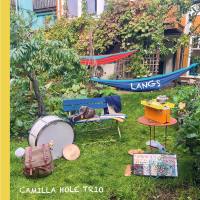
After the extra-terrestial explorations of Eventyrferd, the previous album from Norway's Camilla Hole Trio, in which sci-fi synth sounds were married with traditional material, their latest release Langs is rather more earthbound. But the quest to look beyond their own country's folk music continues.
Camilla Hole's main instrument being the soprano sax, the influence of jazz is unsurprising and this is evident in the opening track “Springleik,” signifying a tune used to accompany the springleik dance from the west of Norway. Initially Hole takes the melody with Egil Kalman and Knut Kvifte Nesheim providing rhythmic support on double bass and drums respectively, with the overdubbing of Kalman's modular synth and Nesheim's vibraphone adding colour. But characteristically for this trio, in which assigned roles are never clearly defined or adhered to, things soon start to move around, with Kalman taking up the melody on his bass, playing the melody in unison with Hole, while Nesheim opens things out further rhythmically. As the whole piece takes on a much more improvisatory feel, Hole plays the melody one more time as things draw to a close.
There's always a pretty good chance on Langs that however a track starts it will end up somewhere else. “Gamle Guro” begins as a drum solo before the tune, a springar from Telemark, takes the spotlight, played by Camilla Hole on the sjøfløyte (recorder) with Egil Kalman playing it in unison on synth. “Metbäcken” starts off in the natural world with the sound of assorted birdsong which in turn gives way to some distinctly human improvisation before the melody of “Metbäcken,” originally a Swedish fiddle tune, is introduced by Hole on the sjøfløyte with Nesheim playing it on vibes.
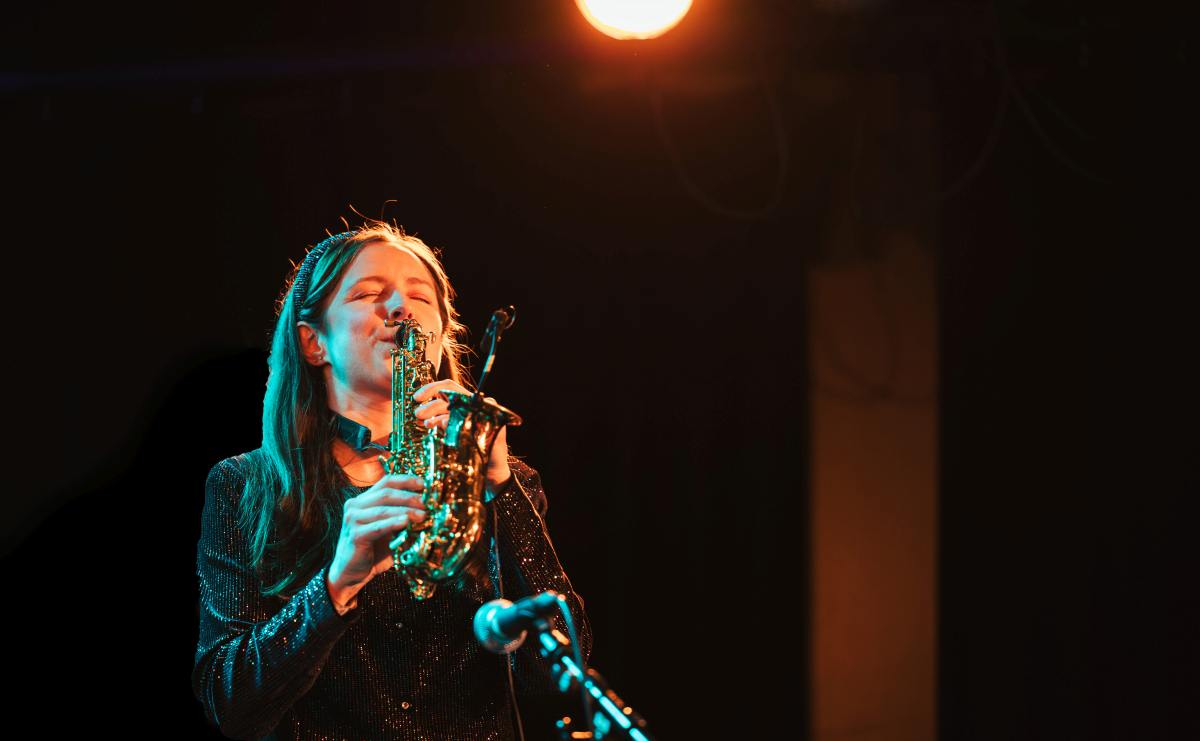
There are no guest artists on Langs as there had been on Eventyrferd, but this allows the trio to extend its own instrumental range. Camilla Hole's sjøfløyte gets more of an airing, as do Nesheim's vibes, while Egil Kalman, as well as bringing his double bass and modular synth to the recording, also reveals his proficiency on the jaw's harp, which is featured on “Gangar.”
While remaining true to the integrity of the musical traditions at the heart of all the tracks, the Camilla Hole Trio continue their mission to give the music a more open, freer context. At just over half an hour, Langs doesn't overstay its welcome, but what it lacks in length it makes up in its depth of ideas. The album is available as a download and as a vinyl LP, with sleeve notes in English.
Camilla Hole Trio - Eventyrferd (Review)
Tiny Sun - Vanishment (Review)
Teija Niku - Tovi (Review)
Subscribe and Support RootsWorld