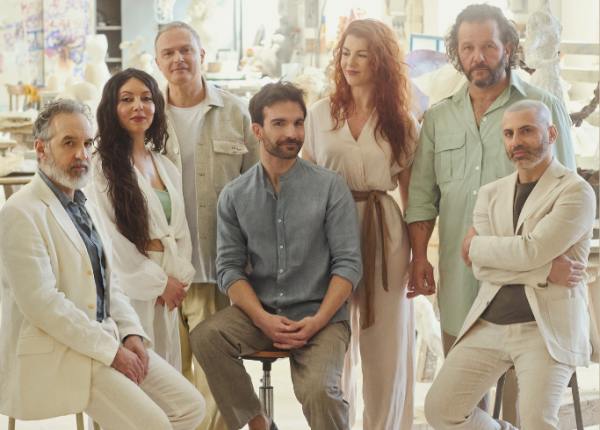
How do you celebrate 50 years of music by a band that blazed trails for the charged, hypnotic pizzica sound, breaking it out of its homeland in southern Italy? How do you look afresh at a sound that’s changed and broadened its appeal without ever abandoning its roots as a new generation took over the instruments? It’s a challenge, but what Canzionere Grecanico Salentino (CGS) have done is reframe some of the pieces from those earlier decades through the lens of those playing and singing the songs now.
The brainchild of Rina and Daniele Durante, early CGS avidly proudly staked out its territory as champions of an almost forgotten culture. In the hands of their son, fiddler/frame drummer and singer Mauro Durante, the original vision has gone global (he also has a successful duo with guitarist Justin Adams) and they’ve become a major name in world music for their energy and outstanding musicality. They’ve made people in so many countries believe in the pizzica. One big milestone acceptance came with working alongside the celebrated pianist Ludovico Einaudi on his Taranta project in 2014, which gave them an even wider reach and boosted them even high. Very aptly, a remix and remastering of the “Taranta” track with him is included.
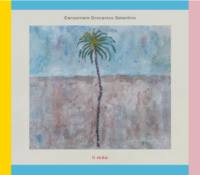
In a world that loves to dance, this is dance music with depth and power that explodes out of the speakers. It honors the material from the past while keeping its eyes firmly fixed on the future, clasping hands across the generations to celebrate the band and its lauded history. Il Mito (The Myth) pays homage without ever being slavish. There’s a real, urgent energy to the music-making here.
The title cut was written by the older Durantes, a cornerstone of CGS’s early repertoire and a reflection on life in their part of Italy. Roberto Licci comes to sing with his son Emanuele. Early vocalist Rossella Pinto reprises her role on “Lu Rusciu De Lu Mare.” Yet this isn’t all hearkening to the past. The sounds have taken on new colors and arrangements as younger fingers play them. It’s still mostly acoustic, with a few electric touches like a synth bass to round out the sound.
This is still completely Italian music, the enveloping, dry sound of pizzica, something that’s evolved over the last half-century, moving from a regional to a global stage. The band, and their compositions, deserve the party, but it begs the question: Where will all this be in another 50 years?

 How do you celebrate 50 years of music by a band that blazed trails for the charged, hypnotic pizzica sound, breaking it out of its homeland in southern Italy? How do you look afresh at a sound that’s changed and broadened its appeal without ever abandoning its roots as a new generation took over the instruments? It’s a challenge, but what Canzionere Grecanico Salentino (CGS) have done is reframe some of the pieces from those earlier decades through the lens of those playing and singing the songs now.